
Procrastination rarely shows up because someone “doesn’t care.” More often, it’s a fast way to regulate feelings: uncertainty, boredom, fear of getting it wrong, or the discomfort of starting. When a task triggers those emotions, the brain reaches for quick relief—scrolling, snacking, organizing, “research,” or anything that feels productive without being the thing.
That’s why willpower alone is unreliable. Motivation rises and falls with sleep, stress, and distractions, while a system stays steady. If a plan only works on high-energy days, it will collapse during busy weeks.
Common hidden drivers include vague tasks, oversized scope, unclear success criteria, perfectionism, and immediate digital temptations. A stronger approach targets four levers: (1) clarity, (2) friction, (3) reward timing, and (4) environment. If you adjust those, starting becomes easier and finishing becomes more predictable.
Define the smallest visible outcome—something you can point to at the end of a focus block (a rough draft, a bullet list, one page). Add a “done for today” threshold so you don’t chase an endless finish line.
Reduce the start barrier with a 2-minute entry step: open the file, write three bullets, or draft one sentence. The goal is to move from avoidance to motion before your brain negotiates you out of it.
Protect a short block (15–45 minutes). Turn notifications off, keep one task open, and make your workspace single-purpose for the duration. Fewer choices means fewer escapes.
End with a “next-action bookmark” so tomorrow begins without re-planning: a sticky note, a final line in your doc, or a checklist that states the next visible step.
Track the system, not just outcomes. Measuring completed focus blocks and successful starts builds consistency even when the project is long.
Big tasks create fog. Fog creates avoidance. The fix is turning an abstract goal into a specific action you can complete in one sitting.
If you get stuck, answer three prompts: What is the next visible step? What would make this 20% easier? What would be good enough for today?
When your environment makes distractions easy, the brain will take the path of least resistance. A few small adjustments can make focus the default.
A smoother workspace can help remove tiny annoyances that become excuses. A reliable, lag-free pointer like the Wireless Rechargeable Bluetooth 5.1 Mouse for Apple Devices can reduce friction during writing, editing, and repetitive clicking—small, but surprisingly helpful when you’re trying to stay in flow.
Sleep and mental health strongly influence focus and self-control; when energy is low, your system matters even more than your intentions. For a helpful overview, see Stanford Medicine’s discussion of sleep and mental health basics: https://med.stanford.edu/news/all-news/2022/04/sleep-mental-health.html.
For practical support during longer work sessions, keeping water and a simple snack nearby can reduce “wander breaks.” The 4L Mini Portable Fridge with Cooling & Warming Function is an easy way to keep a focus-friendly setup without repeated trips that turn into distractions.
| Trigger | What it feels like | 2-minute counter-move |
|---|---|---|
| Too vague | Staring at the task name with no idea where to begin | Write a 1-sentence outcome and the first physical action (open, outline, list). |
| Too big | Overwhelmed before starting | Split into a 15-minute slice; pick one subsection only. |
| Perfection pressure | Waiting for the “right” mood or perfect plan | Start a deliberately messy draft; set a timer for 10 minutes. |
| Low energy | Dragging, restless, easily distracted | Do a minimum viable block: 10 minutes + one tiny deliverable. |
| Digital temptation | Reflexively checking phone or tabs | Move phone away; enable site blocker; open only the needed document. |
Procrastination is also widely recognized as a common, human challenge tied to stress and self-regulation. For additional context, the American Psychological Association provides a useful overview: https://www.apa.org/topics/procrastination. For a deeper look at executive function and self-regulation, the NIH’s public resources are a strong starting point: https://www.ncbi.nlm.nih.gov/pmc/.
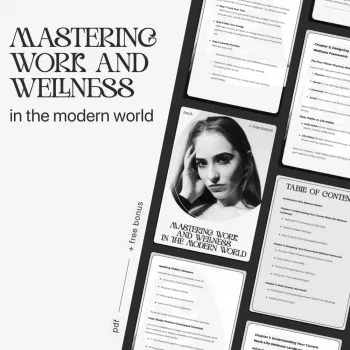
For a ready-to-use digital guide designed around lasting focus, motivation, and time management, explore Procrastination Proof: Strategies for Lasting Focus (eBook).
Reduce the task to one next physical action (open the doc, write three bullets) and commit to a 10–15 minute time box. Aim for progress, not completion—momentum usually follows motion.
Noticeable improvement often shows up within 1–2 weeks if you complete consistent focus blocks. Lasting change comes from repeating the same start routine and doing a short weekly review to keep priorities clear.
It’s often both, but the core is frequently emotion avoidance. Combine clear next steps (time management) with friction reduction and small rewards (motivation) so starting feels safer and easier.











Leave a comment