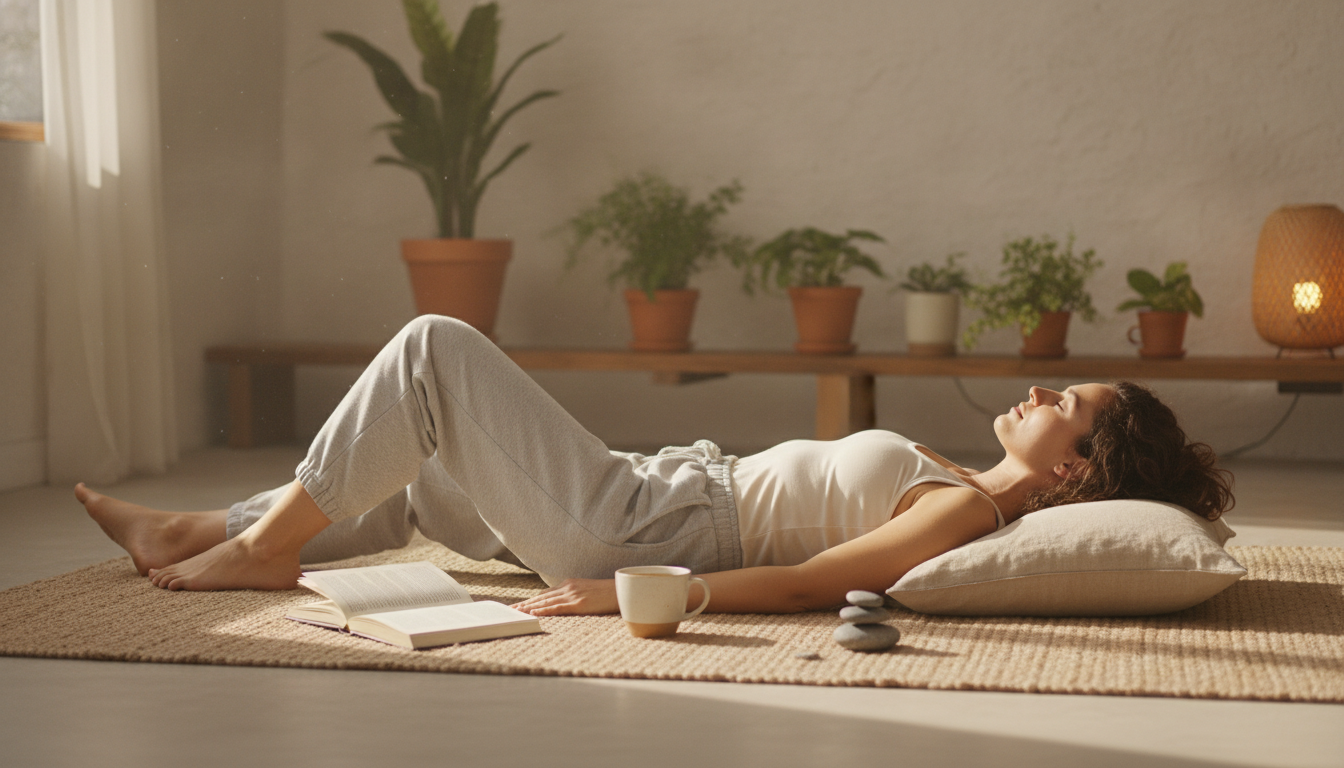
Stress often shows up first in the body—tight shoulders, shallow breathing, jaw clenching, restless sleep, and a constant sense of “on edge.” Relaxing the body isn’t about forcing calm; it’s about sending steady signals of safety through breath, muscles, movement, and daily boundaries. The ideas below blend quick “reset” tools with longer-term habits so relaxation becomes easier to access in real life—mid-email, between meetings, or while getting ready for bed.
When stress hits, the nervous system shifts into fight-or-flight: breathing speeds up, muscles brace, and attention narrows toward potential problems. That response can be useful in a true emergency, but when it runs all day, the body can start treating “normal” as tense—especially in the neck, jaw, chest, lower back, and hips.
Relaxation practices work because they nudge the body toward rest-and-digest, the state associated with better digestion, recovery, and steadier breathing. Often, progress shows up physically first: a softer belly, a slower exhale, shoulders dropping without effort, or a jaw that stops clamping. Over time, those physical changes can make emotions feel less reactive as well. For a deeper overview of how stress affects the body, see the American Psychological Association’s summary.
This reset is designed for speed and subtlety—something you can do at your desk, in the car (parked), or before you walk into the next task.
Relax the jaw. Let your tongue drop from the roof of your mouth. Soften the forehead and the tiny muscles around the eyes.
Inhale gently through the nose, then extend the exhale. Keep it comfortable—no straining or breath-holding. A simple pattern is 3 seconds in, 5–6 seconds out.
Lift your shoulders toward your ears for 2 seconds. Then drop them as you exhale and imagine your collarbones widening.
Place a hand on the chest or belly. Feel the warmth and weight. This anchors attention and reduces mental spinning.
Stand up, roll your ankles, and take one normal-paced lap around the room. That small “transition” tells your nervous system the reset is complete.
| Technique | Time | How to do it | Best for |
|---|---|---|---|
| Extended exhale breathing | 60–120 sec | Inhale softly through nose, exhale longer (e.g., 3 in / 5–6 out) | Racing thoughts, chest tightness |
| Progressive muscle release | 2–5 min | Tense then release: hands, shoulders, face, belly, legs | Body tension, headache-prone days |
| Physiological sigh | 30–60 sec | Two short inhales through nose, one long exhale through mouth; repeat 3–5 times | Sudden stress spikes |
| Grounding with senses | 1–3 min | Name 5 things you see, 4 feel, 3 hear, 2 smell, 1 taste | Overwhelm, feeling “out of body” |
Stress doesn’t always feel like worry. Sometimes it looks like bracing—tiny muscle contractions that become a habit. Try these targeted releases once a day, or whenever you notice stiffness.
Lower lights, reduce loud input, and switch to slower activities about 60 minutes before bed when possible. Relaxation is easier when the environment stops shouting “stay alert.” For more on relaxation methods that calm the stress response, see Harvard Health’s guide to breath and relaxation techniques.
If you’re exploring mindfulness as part of a wind-down routine, the National Center for Complementary and Integrative Health offers a practical overview of effectiveness and safety.
For a step-by-step approach you can follow without overthinking, consider How To Relax Your Body And Live With Less Stress. Using the same routine for two weeks before judging results can help your body learn through repetition.
Two small environment upgrades can also support calmer workdays: a smoother, more comfortable setup for daily computer tasks and convenient access to cool water or snacks. If those are pain points, take a look at the Wireless Rechargeable Bluetooth 5.1 Mouse for Apple Devices and the 4L Mini Portable Fridge with Cooling & Warming Function.
Use a 30–120 second tool like extended-exhale breathing (make the exhale longer than the inhale) or 3–5 rounds of the physiological sigh. Add a quick shoulder drop or a 5-4-3-2-1 grounding scan if you feel overwhelmed.
Tension can become a learned default from frequent stress, long screen time posture, shallow breathing, or conditioned muscle guarding. A twice-daily tension scan and progressive muscle relaxation help retrain the body to release before tightness builds.
Brief practice done consistently tends to work best: 2–5 minutes, 1–3 times per day, plus a simple wind-down routine at night. After a couple of weeks, many people notice their baseline tension drops and recovery feels easier.










Leave a comment