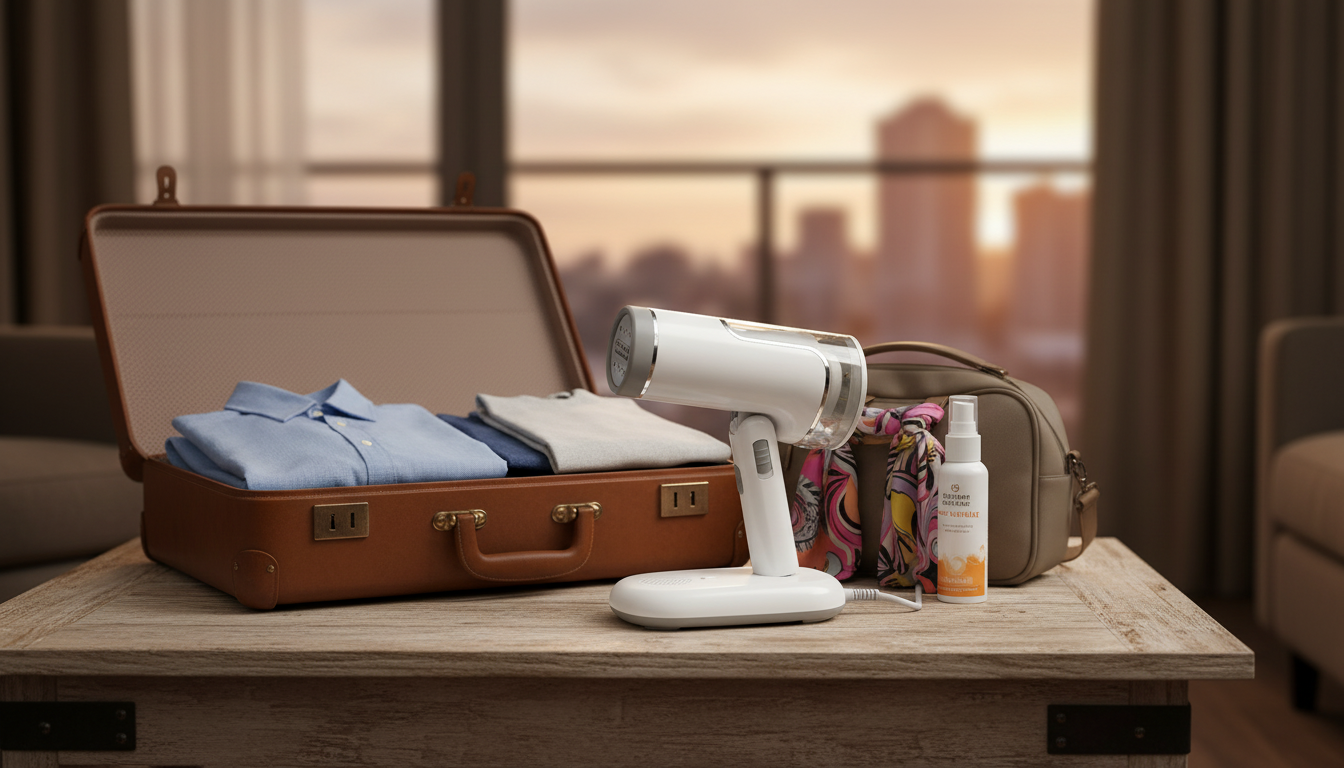
A compact handheld steamer can smooth wrinkles quickly without setting up an ironing board. A 1200W portable garment steamer is built for fast heat-up, steady steam, and easy storage—making it a practical choice for travel, dorms, and everyday clothing care. Below is what to expect from this power level, which features matter most, and how to steam common fabrics safely for a polished, ready-to-wear look.
When a handheld steamer makes the most sense
- Quick touch-ups before work, events, or video calls when pulling out an iron and board feels like too much.
- Travel where luggage space is tight and hotel irons can be hit-or-miss.
- Delicate garments (silk-like blends, synthetics, embellished pieces) where indirect steaming may be gentler than pressing with a hot plate.
- Beyond clothing: refreshing curtains, light upholstery, and helping remove odors from washable fabrics—always follow the item’s care label.
For garment guidance, care labels are the best starting point; the Federal Trade Commission’s care labeling rule explains what those symbols and instructions are meant to communicate.
What 1200W power typically means in daily use
- Less waiting: a 1200W handheld unit usually heats faster than many low-watt compact steamers—helpful when you’re getting dressed in a hurry.
- More consistent steam: a steadier output can relax fibers faster on cotton blends, lightweight denim, and thicker knits.
- Better technique still matters: short, controlled passes work better than holding steam on one spot (which can leave damp patches).
- Design plays a big role: nozzle shape, steam vents, and water flow consistency often determine how quickly wrinkles release.
Key features to check before buying
- Water tank capacity: bigger tanks reduce refills but add weight; smaller tanks are easier to pack but may need topping up for multiple garments.
- Continuous steam time: aim for enough runtime to finish a full outfit (shirt + pants or a dress) without stopping.
- Leak resistance and orientation: many handhelds work best upright; if you plan to steam at angles (like on curtains), confirm it’s designed for that.
- Cord length and swivel: extra reach helps when steaming a hanging outfit on a door hook or garment rack.
- Attachments: a fabric brush can help on thicker items; lint/fuzz tools are useful for quick refreshes.
- Auto shut-off and overheat protection: especially valuable in dorms, shared housing, or busy mornings.
- Voltage compatibility: for international travel, verify voltage support or whether a converter is required.
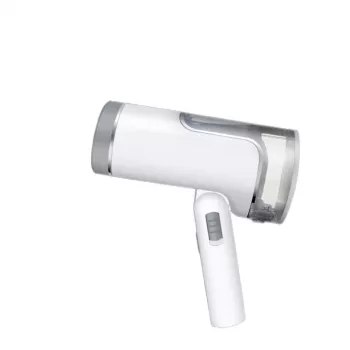
A handheld steamer in this range is designed for quick wrinkle release at home or on the go, without the footprint of an ironing board. It’s a strong fit for small apartments, dorm rooms, and closets where storage space matters. For best results, pair it with a sturdy hanger and a door hook so the fabric hangs straight and you can steam in smooth vertical passes.
To check current pricing and availability, visit the Portable 1200W Handheld Garment Steamer product page.
At-a-glance comparison: handheld steaming vs ironing
| Factor |
Handheld steamer |
Traditional iron |
| Setup time |
Low—hang garment and steam |
Higher—needs board and heat-up |
| Best for |
Light-to-moderate wrinkles, delicate items, quick refresh |
Sharp creases, heavy wrinkles, crisp finishes |
| Risk on delicate fabrics |
Lower when kept a short distance away and moving |
Higher if plate is too hot or left in place |
| Travel friendliness |
High—compact and multipurpose |
Varies—often bulky, depends on travel iron |
| Finish style |
Smooth, relaxed drape |
Pressed, structured look |
How to use a handheld garment steamer for the best results
- Fill with clean water. In hard-water areas, distilled water can help reduce mineral buildup and keep steam flow steady over time.
- Hang the garment so it falls naturally. Hold the fabric taut with a free hand (or use a heat-resistant glove) to help wrinkles release faster.
- Steam in vertical passes from top to bottom, keeping the nozzle moving so one area doesn’t get over-wet.
- Detail zones (collars, plackets, hems): use shorter passes and gently pull fabric straight for cleaner lines.
- Let it dry for a few minutes before wearing or folding to avoid new creases and moisture marks.
- Refreshing odor: light passes are usually enough—avoid soaking the fabric.
For general fabric-care best practices, the American Cleaning Institute’s fabric care basics is a helpful reference alongside garment labels.
Fabric guide: what to steam carefully (and what to avoid)
Safety, maintenance, and longevity
Who this steamer fits best
Travel-friendly add-ons to pair with your steamer
FAQ
Can a handheld steamer replace an iron?
A handheld steamer is great for quick wrinkle release, delicate fabrics, and refreshes, but it doesn’t usually match an iron for sharp creases and a crisp, pressed finish. Many households keep both and choose based on the garment and the look they want.
Is it better to use distilled water in a garment steamer?
Distilled water can reduce mineral buildup, which helps maintain steam output—especially in hard-water areas. If the manufacturer allows tap water, it can work, but the unit may need descaling more often.
How close should the steamer be to the fabric?
For most everyday fabrics, keep the nozzle close enough to deliver steady steam but avoid pressing hard against delicate materials; start slightly away and move closer if needed. Test on an inside seam first, and keep the nozzle moving to prevent wet spots and heat damage.
Recommended for you







Leave a comment