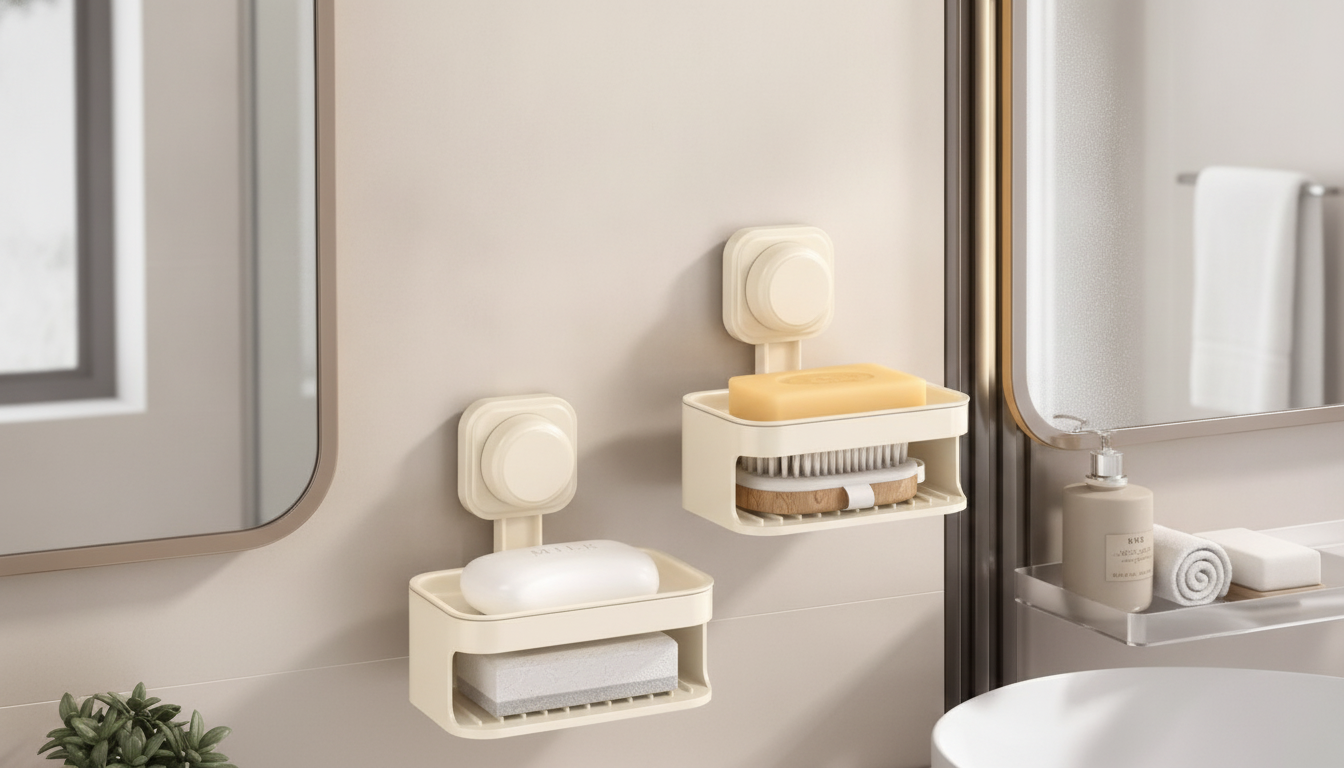
A soap dish that mounts without tools can keep bars dry, reduce sink clutter, and avoid wall damage—especially in rentals, dorms, and small bathrooms. A suction-mounted design is also easy to move when you rearrange a shower caddy, switch soaps, or deep-clean the space. Below is a practical guide to where suction mounting holds best, how to install it for a stronger seal, and why a drainage-style holder can help a bar last longer between replacements.
A non-drill wall mounted soap dish is designed to stick to smooth surfaces without screws or permanent adhesive. Instead of committing to holes in tile or drywall, you get a removable setup that can be repositioned as needed.
If you prefer bar soap for everyday handwashing, pairing cleaner storage with consistent hygiene habits matters. For background on effective hand hygiene, see guidance from the CDC and the World Health Organization.
Suction mounting depends on forming an airtight seal. If air can sneak in around the edge, the cup slowly loses grip—especially under weight or frequent water exposure.
The biggest difference between “it keeps falling” and “it stays put” is usually prep. Take a couple extra minutes and the hold tends to improve dramatically.
Soap left in a puddle stays soft, turns mushy, and breaks down faster. A drainage holder helps in two ways: it lets water drip away and increases airflow around the bar so it can firm up between uses.
Small placement changes can make suction more reliable and keep the soap drier.
All three mounting styles can work—choosing quickly comes down to surface type first, expected load second, and how often you plan to move the holder.
| Mount Type | Best For | Pros | Trade-Offs |
|---|---|---|---|
| Suction cup | Smooth tile, glass, mirror, sealed surfaces | No holes, easy to reposition, quick install | May slip on textured/porous walls; needs clean, dry prep |
| Adhesive mount | Painted walls (depending on adhesive), some tiles | Often stronger than suction; low profile | Can leave residue; removal may damage paint or finish |
| Drilled bracket | Any wall with anchors/structure | Most stable for heavier loads; long-term setup | Permanent holes; tools and time required |
Regular cleaning keeps drainage working and helps suction maintain a better seal over time.
Usually not reliably. Suction needs an airtight seal, and textured or porous tile (plus grout lines) often lets air seep in; glossy tile or glass tends to hold much better.
Clean the mounting area with soap and water, finish with isopropyl alcohol, and dry fully. Press firmly to push out air (warming the cup can help), then wait 30–60 minutes before adding a wet bar.
A quick weekly rinse helps keep drain paths open and reduces residue buildup. Do a deeper clean as needed if you notice soap scum, slime, or slow drainage.








Leave a comment