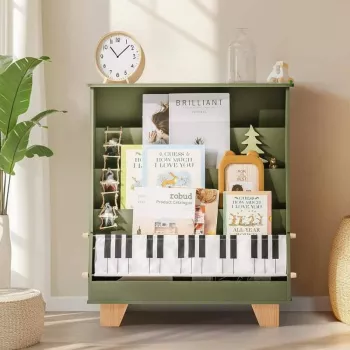
A kid-friendly bookshelf that keeps favorite stories within reach while giving toys a dedicated home can make daily cleanup easier and reading time more inviting. This 4-tier natural wood bookcase combines a front-facing book display with open toy storage to support independent tidying and a calmer play space—especially helpful for toddlers and early readers who choose books by the cover.
If you’re looking for a simple, all-in-one “grab a book, then put toys away” station, the 4-Tier Kids Bookshelf with Toy Storage – Natural Wood Bookcase for Boys & Girls is designed to keep everyday favorites visible and reachable.
Because the book display and toy storage live in one footprint, it’s easier to maintain a “home base” for the most-used items. That reduces the slow creep of clutter across floors, beds, and dressers—especially in smaller bedrooms.
A simple way to make the shelves “self-serve” is to keep the top tiers for lighter picture books and the lower area for heavier toys or board books. Kids get autonomy without needing to climb or tug at unstable stacks.
For a learning corner that pairs naturally with a reading-and-sorting routine, the Montessori Wooden Arithmetic Board can sit nearby on a low table, keeping hands-on activities close to the book-and-toy station.
In tighter rooms, consider placing it along a wall that already functions as a “kid zone” (near a small table, play mat, or reading chair). Keeping kid essentials clustered makes it easier to reset the room quickly at the end of the day.
Use the table below as a shopping checklist for evaluating kid bookcases with toy storage. Measure the intended spot (width, depth, height) and note baseboard protrusions before ordering. Also consider whether additional wall anchoring is needed based on the child’s age and climbing risk.
| Feature | Why it matters | What to look for |
|---|---|---|
| Tier count | More tiers = more covers visible at once | 4 tiers for a balanced mix of display and access |
| Toy storage style | Determines how fast cleanup can be | Open cubbies/bins area for toss-in storage |
| Material & finish | Affects durability and feel | Smooth edges, easy-to-wipe surfaces, stable panels |
| Stability & anchoring | Reduces tip risk | Wide base, anti-tip hardware option, place on level floor |
| Kid accessibility | Encourages independence | Lower shelves/storage reachable without climbing |
For additional guidance on reducing tip-over risks in the home, review CPSC Furniture Tip-Over Prevention and broader family home-safety recommendations from HealthyChildren.org (American Academy of Pediatrics).
Cover-facing tiers make it easier for young kids to browse and choose books independently, while flat shelves often hide covers and rely on spine-reading. A standard shelf can hold more in a tight space, but it may be less inviting for toddlers and preschoolers.
Anchoring is recommended when possible, especially in homes with toddlers, because it helps reduce tip-over risk. Keep heavier items on the bottom to improve stability.
Rotate a small set of books on display, use labeled bins for toy categories, and assign a simple “home” for each item type. A quick daily reset keeps the system from overflowing.









Leave a comment