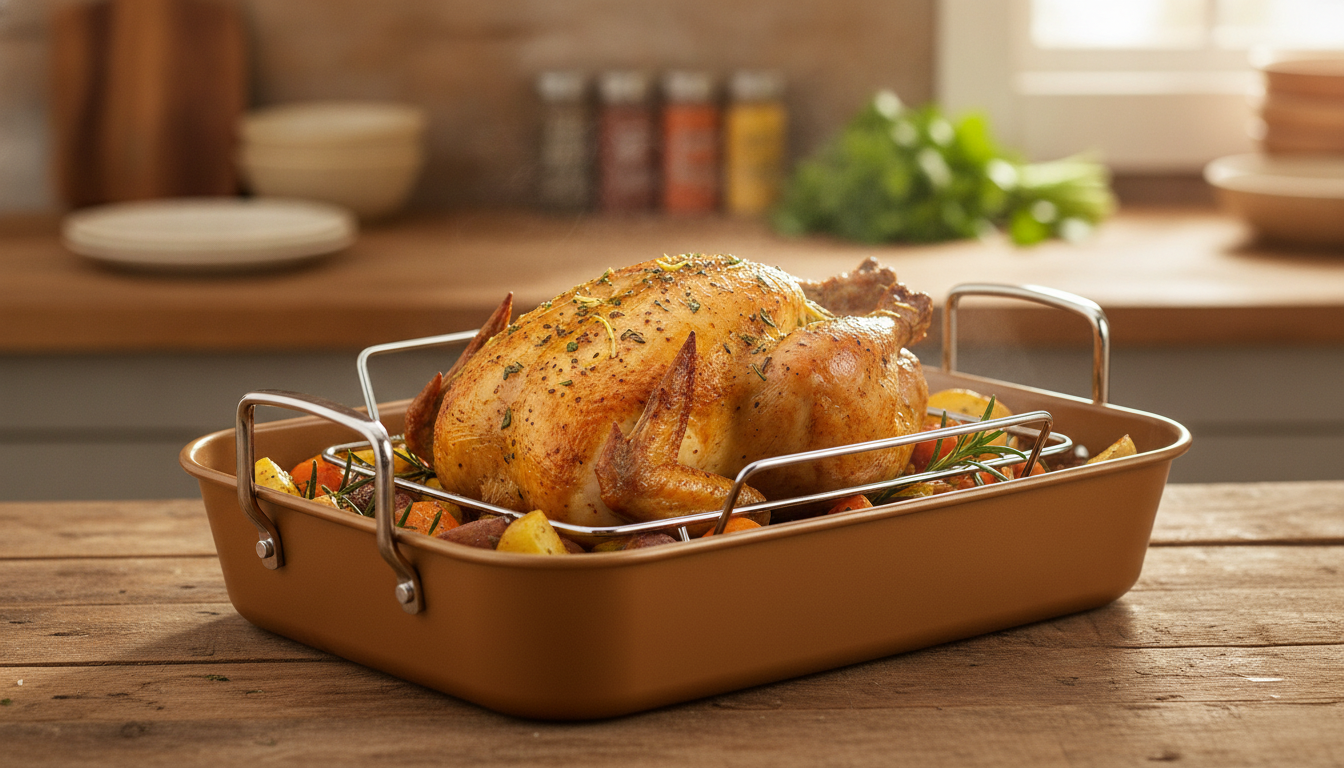
A good roaster does two jobs at once: it browns evenly and keeps drippings manageable for gravy or jus. A nonstick roaster paired with a rack helps lift meats and vegetables for better airflow while simplifying cleanup after big meals or weeknight batch cooking. If the goal is crackly chicken skin, well-rendered pork, or roast vegetables that don’t turn soggy in pooled juices, a roaster-and-rack setup makes the process more predictable from start to finish.
The simple act of elevating food changes how heat moves around it. Instead of the bottom sitting in hot fat and moisture, hot air can circulate, and drippings collect below for basting or sauce-making.
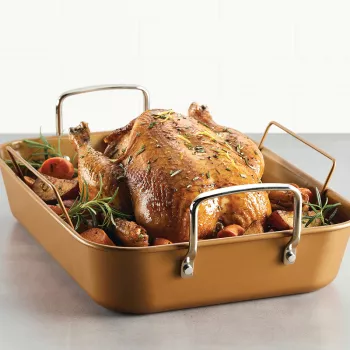
For a dedicated option, the Curry Nonstick Roaster with Rack is built around that lift-and-drain approach, so meats sit above drippings while the pan stays easier to manage when it’s time to pour off fat or deglaze.
Nonstick shines when roasts are coated in spice rubs, honey glazes, or marinades that caramelize onto hot metal. It won’t eliminate all browning on the pan (those browned bits are flavor), but it can reduce stubborn, cement-like residue and shorten cleanup.
One more habit that pays off: when making gravy, scrape gently. A soft spatula or nylon whisk can lift flavorful fond without turning “cleaning later” into “scrubbing forever.”
The rack isn’t just for turkeys. It’s a practical tool for everyday roasts, especially when you want a dry surface and better airflow.
For food safety and consistent results, rely on internal temperature rather than timing alone. The USDA’s safe temperature chart is a solid reference for minimum internal temperatures: USDA Food Safety and Inspection Service: Safe Minimum Internal Temperatures.
Roasting is mostly about moisture management: keep the surface dry for browning, then rest so juices stay in the meat when you slice. These small steps add up.
| Goal | Rack Position | Add Liquid? | Best For |
|---|---|---|---|
| Crisp exterior | Use rack | Minimal (optional) | Chicken, turkey breast, pork roast |
| More pan juices | Use rack | Small amount | Beef roast, lamb, gravy-focused meals |
| Roast vegetables in drippings | Use rack with veg underneath | Optional | Whole chicken with potatoes/carrots |
| Maximum browning on vegetables | Veg beside/around rack | No | Sheet-pan-style sides, higher-heat roasting |
Resting is where “looks done” turns into “stays juicy.” If you want the why behind it—carryover cooking and juice redistribution—see: Cook’s Illustrated: Why Resting Meat Matters.
For meal-prep routines, pairing a good roaster with smart storage helps. The 4L Mini Portable Fridge with Cooling & Warming Function can be handy for keeping leftovers chilled in an office, dorm, or guest room without competing for main-fridge space.
| Item | Details |
|---|---|
| Product | Curry Nonstick Roaster with Rack |
| Price | 44.67 USD |
| Availability | In stock |
| Product page | https://leadingdealcorner.shop/curry-nonstick-roaster-with-rack/ |
If you like pulling up recipes on a tablet or laptop while cooking, a small accessory can keep counters less cluttered. The Wireless Rechargeable Bluetooth 5.1 Mouse for Apple Devices is a simple add-on for smoother scrolling and less screen tapping with messy hands nearby.
Often it’s not recommended because broilers can exceed the temperatures many nonstick coatings are designed to handle. Check the manufacturer’s care instructions, keep the pan well below the heating element if allowed, and stick to roasting temperatures for browning when unsure.
Use the rack when crisping, rendering fat, or keeping meat out of drippings is the priority. Skip it for braises or pot-roast-style dishes where contact with liquid (and slower, wetter cooking) is part of the goal.
Wash the rack in warm soapy water with a non-abrasive sponge or a soft brush, and soak briefly for stuck-on bits. Avoid steel wool or harsh scouring pads, then dry thoroughly to prevent spotting or residue buildup.









Leave a comment