A compact scratching post can protect furniture while fitting neatly into apartments, bedrooms, and tight corners. The best options balance a small footprint with a steady base, a durable scratch surface, and an inviting texture that cats actually choose—so scratching becomes a daily habit instead of a constant redirect.
What a Compact Scratching Post Should Do
Even when floor space is limited, a scratching post still needs to meet a cat’s basic scratching instincts: stretch, mark, and shed old nail sheaths.
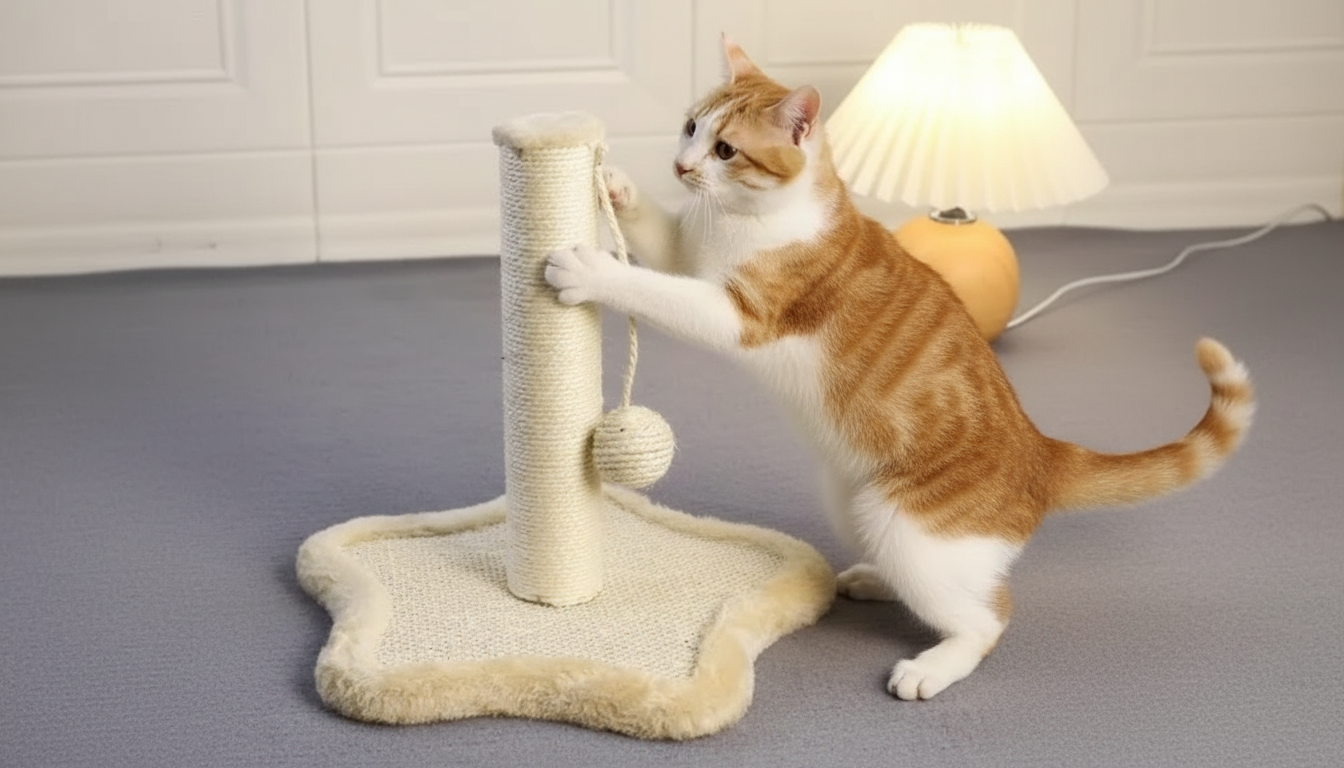
- Support full-body stretching: The post should be tall enough for your cat to extend upward comfortably without the base lifting or rocking.
- Offer a satisfying texture: Many cats gravitate to rope-like scratch surfaces, while others prefer cardboard-style ridges or durable scratch fabrics.
- Stay put on contact: Compact doesn’t mean lightweight. A steady base helps the post “win” over furniture because it feels reliable under pressure.
- Blend into daily pathways: Cats scratch where they already spend time. Positioning near sleep zones and common routes increases use.
- Provide an obvious target: A defined vertical post can be easier for many cats to understand than flat scratchers alone—especially when training.
Key Features That Matter Most in Small Homes
In tight layouts, the right details make the difference between a post that gets ignored and one that becomes part of your cat’s routine.
- Base footprint and weight: A wider or heavier base improves stability without taking up much additional space.
- Post diameter: Thicker posts tend to feel sturdier, wobble less, and often hold up longer under daily scratching.
- Surface durability: Tightly wrapped fibers and secure fastening reduce unraveling and keep the post looking neat longer.
- Replaceability: Some designs let you replace the scratch surface or swap the post portion when it wears down.
- Floor compatibility: Non-slip padding helps on tile or wood; washable pads can be helpful for carpeted areas that trap fur.
Quick Checklist for Comparing Compact Scratching Posts
| Feature |
What to Look For |
Why It Helps |
| Height |
Enough for a full stretch |
Encourages use and reduces wall/furniture scratching |
| Base stability |
Wide, weighted, or non-slip base |
Prevents tipping and startle-avoidance |
| Scratch surface |
Tightly wrapped rope-like fiber or durable scratch fabric |
Improves longevity and cat satisfaction |
| Placement flexibility |
Fits corners and near resting areas |
Increases daily engagement |
| Maintenance |
Easy spot-cleaning; replaceable parts if available |
Keeps the post attractive and hygienic |
Sizing and Placement That Makes Cats Choose It
Small-space success is less about “hiding” the post and more about making it the most convenient option.
- Place near rest zones: Many cats scratch after waking, so putting a post near a bed or nap spot can increase adoption quickly.
- Use “problem area” pairing: Place the post beside the furniture edge your cat targets; once your cat uses it consistently, move it only if needed (and only a little at a time).
- Create a corner station: Corners save floor space and can make the base feel more secure, especially for energetic scratchers.
- Avoid hidden locations: Cats often prefer visible, high-traffic zones for scent marking and stretching.
- Keep it steady: If the post shifts, some cats stop using it. A non-slip mat can be a simple fix.
Helping a Cat Learn to Use a New Post
If your cat has a long-standing couch-corner habit, the goal is to make the post more rewarding and the furniture less convenient—without turning scratching into a negative experience.
- Introduce with positive cues: Sprinkle a small amount of catnip (if your cat responds to it) or use a cat attractant near the base.
- Reward interaction: Treat or praise immediately after your cat scratches the post so the post becomes associated with good outcomes.
- Demonstrate gently: Lightly scratch the surface with fingertips to create sound and curiosity; avoid forcing paws onto the post.
- Make it the easiest option: Temporarily cover tempting furniture corners with a throw or protective tape during training.
- Maintain appeal: Trim loose fibers, vacuum around the base, and adjust placement slightly if interest drops.
Materials and Safety Considerations
Scratching is normal, healthy behavior. The safest posts are sturdy, cleanable, and built without small hazards that show up after weeks of wear.
For more guidance on normal scratching behavior and cat care basics, see resources from the Humane Society of the United States and the ASPCA. If you’re weighing long-term options, the AVMA’s declawing policy provides important context on why environmental solutions like scratchers matter.
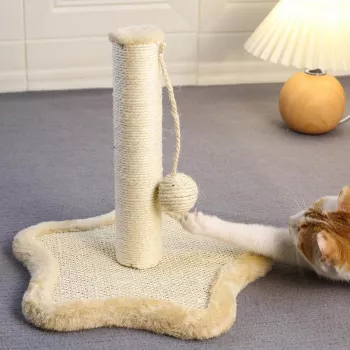
Compact Cat Scratching Post is an easy starting point when you need a small-space-friendly option that still encourages upright stretching and routine use.
Small-Space Bonus: A Helpful Companion Item
If you want a tiny, dedicated spot for household odds and ends in a tight room, consider the 4L Mini Portable Fridge with Cooling & Warming Function as a compact add-on that helps keep routines organized without taking over counter space.
Care, Longevity, and When to Replace
FAQ
How tall should a compact scratching post be?
Aim for a height that lets your cat stretch upward fully without hunching. Just as important, choose a model that stays stable and doesn’t wobble during a full-body reach.
Where should a scratching post be placed in a small apartment?
Place it near a sleeping spot or along a high-traffic route, and right next to any furniture your cat targets. Corners often work well because they save space and can help the base feel more secure.
Is it normal for the scratching surface to fray?
Light fraying is normal with regular use. Trim loose strands, keep an eye out for long strings or exposed fasteners, and replace the post if it becomes unstable or develops hazards.
Recommended for you










Leave a comment