
Busy days don’t fall apart because motivation is missing—they fall apart because decisions pile up. When every choice (what to eat, when to move, how to unwind) becomes one more thing to “figure out,” healthy routines are usually the first to go. A small, repeatable checklist lowers mental load, protects the essentials (sleep, movement, food, hydration, stress care), and turns “healthy” into a few doable actions you can complete even on your most packed days.
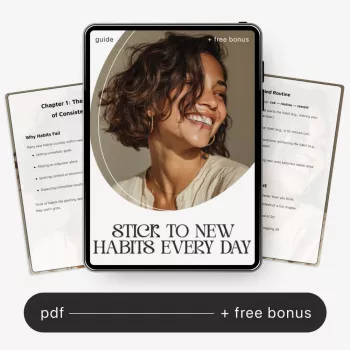
Below is a practical daily framework, easy habit-stacking ideas, and a low-pressure way to track progress. If you want a ready-to-use format you can print or use digitally, the Printable Healthy Habits Checklist for a Busy Life (digital PDF) makes it simple to keep your plan visible and consistent.
On overloaded schedules, “healthy” isn’t a perfect meal plan and a 60-minute workout. It’s covering a few non-negotiables that pay you back with energy, steadier mood, and better focus.
If you’re unsure where to start, consider focusing on movement and sleep first—both strongly influence stress, appetite, and daily performance. For evidence-based guidance on activity benefits, see the CDC overview of the benefits of physical activity.
Choose a small set of actions you can repeat most days. The goal is reliability, not intensity.
| Area | 2-minute minimum | 10-minute option | When to do it |
|---|---|---|---|
| Hydration | Drink 8–12 oz water | Refill bottle + add electrolytes/lemon | After bathroom / before coffee |
| Movement | Mobility: neck/hips/ankles | Brisk walk or stair loop | After first meeting / after lunch |
| Nutrition | Add protein to next meal | Protein + produce plate (quick assembly) | Breakfast / lunch |
| Stress | 4–6 slow breaths | Guided reset or stretch | Between tasks |
| Sleep | Set a shutdown time | No-screens wind-down routine | 60 minutes before bed |
If “healthy eating” is the hardest part of your week, reduce friction: keep simple proteins and snackable produce visible and ready. A convenient option is a 4L mini portable fridge for keeping healthy snacks and drinks nearby, especially for home offices, dorm rooms, or bedrooms where a quick, better choice helps you avoid skipping meals.
Habit stacking is a simple method: attach a new habit to something you already do automatically. The key is making the cue obvious and the action tiny enough that you’ll follow through.
Example stack that works on a packed calendar: “After I heat lunch, I add one produce item.” It’s fast, doesn’t require tracking macros, and aligns with practical nutrition guidance like Harvard’s Nutrition Source (emphasizing overall food quality and balanced plates).
Tracking should make things easier, not heavier. The fastest way to burn out is to measure too much, too precisely, for too long.
If sleep is your weak link, focus on the simplest lever: consistency. The NHS sleep tips emphasize routines and wind-down strategies that work best when repeated, not when done perfectly once in a while.
If you want a plug-and-play format, the Healthy Habits Checklist for a Busy Life printable planner provides a structured daily page you can repeat, adjust, and restart whenever life gets hectic.
Start with 3–5 habits and cap it at 7. Choose the actions with the biggest impact that you can do consistently, then add only one new habit after 7–14 days of reliability.
Treat the checklist like data, not a grade. Use A/B/C versions (ideal, short, minimum) and shrink the habit when life gets hectic instead of quitting.
Paper can be more visible and lower-friction because it’s always “open” and doesn’t add screen time. Apps work well for some people, and a hybrid approach (paper daily, quick weekly digital recap) can combine the strengths of both.










Leave a comment