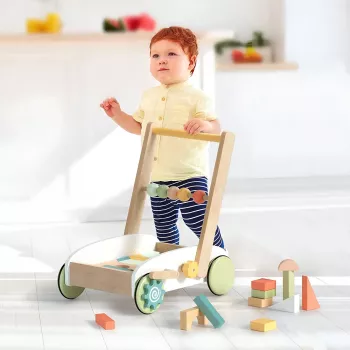
A sturdy push walker can support early walking practice while keeping little hands busy with simple, screen-free activities. A wooden baby push walker with blocks combines a stable handle for cruising and walking with block play that builds coordination, problem-solving, and confidence—whether used for short practice laps or longer pretend-play sessions.
Unlike sit-in baby walkers (the kind a baby sits inside), a push walker is a toy your child stands behind and pushes. That difference matters for both development and safety. If you’re looking for a classic, battery-free option that grows with your toddler’s abilities, a wooden push walker plus blocks can be an easy everyday go-to.
Many toddlers start pulling to stand and cruising around furniture before they’re ready for independent steps. For a quick reference on typical development around the first year, see the CDC’s 1-year milestones.
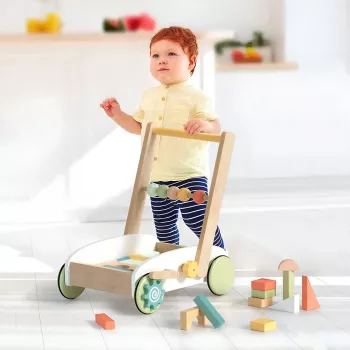
If you want a simple, ready-to-go option, the Wooden Baby Push Walker with Blocks for Toddlers Learning to Walk is a practical pick for supervised indoor play and short practice sessions.
For deeper context on why sit-in walkers are considered dangerous, review guidance from the American Academy of Pediatrics and the Consumer Product Safety Commission (CPSC).
A helpful rhythm is “push, pause, reset.” Those tiny pauses teach control and reduce the chance of a sudden lunge on smooth floors.
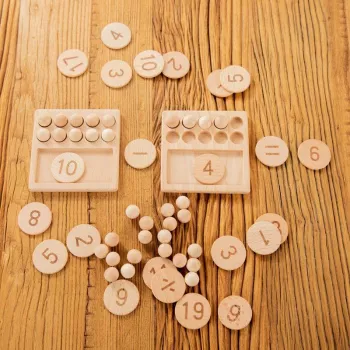
To extend learning beyond walking days, a simple tabletop activity can keep the same hands-on vibe. The Montessori Wooden Arithmetic Board pairs well with block play for calm, focused number practice as your child grows.
| Option | Best for | Things to watch |
|---|---|---|
| Wooden push walker with blocks | Cruising to early independent steps; combined gross- and fine-motor play | Speed on slick floors; supervision near stairs; block choking risk for younger siblings |
| Ride-on toy | Leg strength, steering, and confidence on stable surfaces | Can encourage fast movement; needs clear space |
| Activity/play table | Standing practice and hand skills while in one spot | Less forward walking practice |
| Holding hands while walking | Short practice bursts and confidence with close support | Adults may unintentionally pull arms upward; keep movements gentle |
Name: Wooden Baby Push Walker with Blocks for Toddlers Learning to Walk
Price: $38.51 (USD)
Availability: In stock
Best used with: flat indoor surfaces, supervised play, and short practice sessions that build gradually
Many toddlers can start using a push walker once they can pull to stand and cruise confidently, often around 9–15 months, but timing varies. Always follow the product’s listed age guidance and supervise closely during early practice.
Try using a rug runner or play mat for traction, and place a few blocks in the storage area to add a little stability without overloading it. If available, choose models with adjustable wheel resistance and keep the practice area well away from stairs.
They can be safe with supervision and age-appropriate block size, especially when you regularly check for cracks or chips. Keep blocks out of reach of younger siblings due to choking risk and monitor mouthing during play.









Leave a comment