
Realistic expectations reduce burnout, protect motivation, and make progress easier to repeat. The most reliable goals aren’t built for “perfect weeks”—they’re built for real life: work demands, errands, fatigue, and the occasional curveball. This guide helps turn vague hopes into clear commitments, choose a pace that fits your actual capacity, and build a simple review rhythm so your goals stay grounded even when days get messy.
Most plans fail for predictable reasons. A common mismatch is planning for an “ideal week” instead of an “average week” that includes low-energy days and unexpected delays. When the plan assumes everything goes right, one disruption can knock the whole system off track.
All-or-nothing thinking makes it worse: one missed day becomes “I blew it,” and quitting feels logical. A realistic plan includes recovery steps, not just perfect execution. It also assumes progress will be uneven—so it’s smarter to track trendlines over weeks than to judge yourself by a single day.
Finally, sustainable expectations respect four limits: energy, time, money, and attention. Under stress, all four tighten. Designing your plan around these limits keeps goals doable even when life gets loud. For more on how habits support change over time, see the American Psychological Association’s overview of habits.
Before setting a target, measure what’s already true. A baseline isn’t a judgment; it’s a starting point that keeps your expectations honest.
| Baseline observation | Realistic expectation | What to track |
|---|---|---|
| Only 3 free evenings most weeks | Plan 2 sessions, keep 1 as buffer | Sessions completed per week |
| Focus drops after lunch | Schedule deep work before noon | Minutes of focused work in morning block |
| Exercise happens 1x/week currently | Aim for 2x/week for 4 weeks before increasing | Workouts per week + average effort |
| Cooking fails when groceries run out | Add one recurring restock day | Days with planned meals available |
Vague goals (“get healthier,” “be more productive,” “save money”) feel inspiring, but they don’t tell you what to do on a Tuesday at 7:30 p.m. Clear commitments translate intention into action.
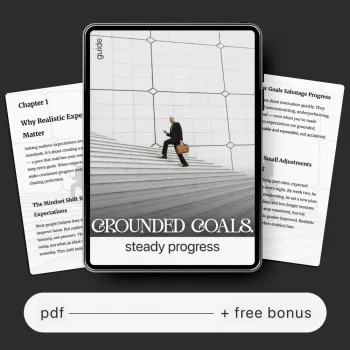
If you want a ready-to-use template for this step, Grounded Goals, Steady Progress (digital guide) walks through turning fuzzy hopes into a one-page plan you can repeat whenever life changes.
Strong goals are less about willpower and more about systems. A steady-progress system keeps moving even when you’re tired, busy, or distracted.
Small process supports can help you follow through when attention is thin. For example, a simple desk setup that reduces friction can make planning and execution feel lighter—like using a dependable pointer device for quick check-ins and weekly reviews. If you work on an iPad or Mac, a Wireless rechargeable Bluetooth mouse for Apple devices can make short planning sessions less annoying, which matters more than it sounds when you’re trying to keep consistency.
This matches what many behavior-change frameworks emphasize: consistency and environment design beat relying on motivation alone. The NHLBI guidance on behavior change highlights the value of practical steps and repeatable routines—especially when life isn’t predictable.
If you want a compact, practical structure you can apply to fitness, learning, finances, or work projects, Grounded Goals, Steady Progress (digital guide) is designed to function like a reset button: clear enough to use on busy weeks, flexible enough to adjust when life changes.
Keep the outcome ambitious, but set a pace that matches your current capacity. Build consistency first, then increase by 10–20% after a few stable weeks using minimum/ideal targets so ambition doesn’t depend on perfect days.
Add buffers and fallback versions so disruptions don’t equal failure. Plan for an average week, use if-then rules for common interruptions, and replan weekly instead of trying to “make up” everything at once.
Consistency signals often show up within 2–4 weeks (more completed sessions, fewer restarts), while bigger outcomes may take longer. Track weekly trendlines and adjust the system rather than expecting immediate results from any single week.












Leave a comment