
A positive mindset is built through small, repeatable practices—especially on busy days when motivation dips. The Positive Mindset Techniques Bundle | 5 in 1 Digital Download for Daily Positivity, Self-Talk & Personal Growth is designed to make daily positivity, supportive self-talk, and steady personal growth easier to practice with simple, structured tools that can be used in minutes.
A positive mindset isn’t pretending everything is great. It’s a practical way of thinking that keeps you steady when life is messy and helps you respond with intention instead of impulse.
Many of these skills align with cognitive and resilience-based approaches used in psychology, including cognitive restructuring and everyday resilience-building practices supported by the American Psychological Association.
When mindset work is too open-ended, it’s easy to skip. This bundle leans on structure so the “what do I do?” question is answered for you—without turning positivity into pressure.
If stress tends to spike in the same moments (right before work, after school pickup, late at night), keeping these pages easily accessible can reduce decision fatigue—so you can default to a helpful routine instead of spiraling.
This is a low-friction way to get started. It’s not about doing everything perfectly; it’s about building a repeatable loop you can return to when life gets loud.
For an extra calming “reset,” many people pair mindset work with brief mindfulness or breathing. If you want a science-based overview of mindfulness basics, the NCCIH guide to meditation and mindfulness is a helpful reference.
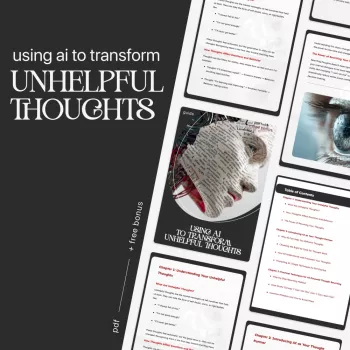
Shifting self-talk works best when it stays honest. The goal is not “everything is fine,” but “I can handle the next step.” A simple sequence:
| Unhelpful thought | More helpful self-talk | Next small step |
|---|---|---|
| I always mess this up. | This is hard, and I can improve one piece at a time. | Fix one section, then ask for feedback. |
| They’re judging me. | I can’t read minds; I can focus on being clear and respectful. | Take one breath, then speak slowly. |
| I’m behind everyone else. | My pace can still lead to progress if I stay consistent. | Do 10 minutes on the next task. |
| If this fails, it’s over. | One setback won’t define the whole outcome. | List two alternatives and choose one. |
| I don’t have motivation. | Motivation follows action; a small start is enough. | Start with a 2-minute timer. |
If you like building a “reset corner,” a small comfort item can reinforce the routine. For example, keeping a drink cold or warm nearby can make your check-in feel more like a pause and less like a task; the 4L Mini Portable Fridge with Cooling & Warming Function can be a practical addition to a desk or bedroom routine.
The Positive Mindset Techniques Bundle | 5 in 1 Digital Download for Daily Positivity, Self-Talk & Personal Growth is a digital download designed for repeat use. To start strong without overhauling your schedule:
Small shifts often show up within a few days—like noticing thought patterns sooner or calming down faster after a trigger. Bigger changes usually take a few weeks of consistent repetition, especially when the focus is realistic self-talk rather than forced positivity.
Yes—use it in short form: bullet answers, a two-minute check-in, or a single prompt per day. Keeping it low-effort makes it more likely you’ll stick with it on busy days.
They can, especially when you adapt them to real moments like meetings, feedback, or conflict. Brief reframes and pre-written self-talk scripts work well when paired with a behavior-based next step you can do immediately.












Leave a comment