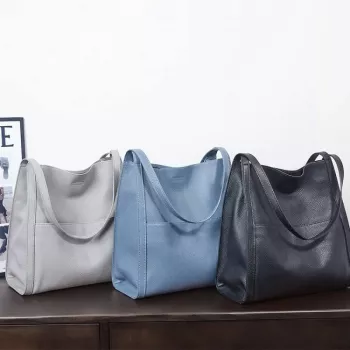
A large-capacity cowhide leather tote is built for days that require more than the essentials—work items, travel basics, and daily carry—while keeping a polished look. The difference between a “big bag” and a truly usable large tote often comes down to access, structure, and how the leather and handles hold up under real weight.
Below is a practical guide to what “large capacity” can realistically mean, how to spot genuine cowhide quality without overthinking it, and how to keep a leather tote looking better as it ages.
Capacity isn’t only about the bag’s overall dimensions. A tote can look large but feel cramped if the opening is narrow, the base collapses, or the interior has no logic. When comparing options, focus on how comfortably items go in and out—and whether the bag keeps its shape when set down.
| Item | What to Look For | Practical Notes |
|---|---|---|
| 13–14 in laptop | Flat interior space + protective sleeve or room for a slim case | Avoid packing hard objects directly against the laptop; use a padded insert if the tote is unlined. |
| A4/Letter documents | Interior height/width without bending corners | A structured tote prevents curling papers. |
| Water bottle | Base width and side clearance | Use a bottle pocket or keep upright near a corner to reduce spills. |
| Cosmetic pouch / small organizer | Interior pockets or a dedicated pouch | Organizers keep the main cavity from becoming a “dump zone.” |
| Light sweater / scarf | Flexible top opening and enough depth | Soft items fill gaps and cushion delicate items. |
Genuine cowhide tends to look and feel “alive” compared to synthetic materials, but it can still be finished in different ways. A quick check of surface, edges, and stress points usually reveals whether the bag is built for daily carrying.
A large tote can become a shoulder strain if the handles are narrow or the bag’s structure lets everything slide to one side. Comfort is a combination of handle design and how the tote naturally holds a load.
The best large totes aren’t packed tighter—they’re packed smarter. A few repeatable “home spots” for essentials makes a big bag faster to use than a small one.
For additional care guidance, consult reputable leather-care references like Leather Honey’s leather care basics and the Smithsonian’s overview on caring for leather.
| Detail | Value |
|---|---|
| Product name | High-Quality Genuine Cowhide Leather Tote Bag – Large Capacity |
| Price | 83.01 USD |
| Availability | In stock |
| Product page | View product |
Safe carrying capacity depends on handle reinforcement, stitching quality, and how structured the base is. For everyday use, keep the load comfortable, distribute weight evenly, and avoid routinely overloading the tote with dense, heavy items that stress seams and hardware.
Genuine cowhide usually shows natural grain variation, feels substantial (not plasticky), and develops a softer patina with time. Checking the edges, interior finishing, stitching consistency, and how the material creases under light pressure can also help separate real leather from synthetics.
Wipe it down regularly with a soft, dry cloth, and use a leather-appropriate cleaner for deeper cleaning after spot-testing first. Condition occasionally—rather than frequently—to prevent dryness, and always let the bag dry naturally away from direct heat if it gets wet.











Leave a comment