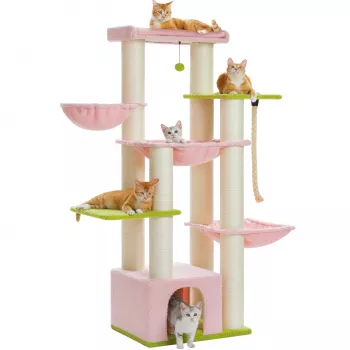
A good cat tree adds vertical territory, scratch-friendly surfaces, and cozy rest spots in one stable setup. The right pick depends on the cat’s size, climbing style, and how much room is available at home—especially for larger breeds or multi-cat households.
Cat trees aren’t just “cat furniture.” They’re a practical way to meet daily behavioral needs while making home life calmer and cleaner.
Many feline behavior guidelines emphasize the value of vertical territory and predictable “safe zones,” especially in indoor environments. For deeper reading, see International Cat Care’s advice library and the AAFP feline-friendly home guidance.
The best cat tree is the one your cat uses every day. That usually means fitting the tree to the cat’s body size, mobility, and preferred “hangout style.”
If your cat tends to scratch your couch corners, a prominent scratching post near that spot often gets faster results than placing the tree “somewhere convenient.” For scratching basics and redirection tips, the ASPCA’s cat behavior resources are a helpful reference.
Two cat trees can look similar online and feel completely different at home. Focus on build and usability details that matter during real daily use.
Comfort also includes “confidence.” If a tree wobbles even a little when your cat launches upward, many cats will stop trusting it—especially heavier cats or cautious seniors.
Before buying, do a quick measuring pass. A cat tree needs floor space, jump clearance, and a safe landing zone—especially if it’s placed near a window or busy walkway.
| Household need | What to look for | Good placement |
|---|---|---|
| Large or heavy cat | Wide platforms, roomy condo, thick posts, broad base | Against a wall or in a corner for extra stability |
| Multi-cat home | Multiple perches at different heights, more than one scratch zone | Central area plus an escape route nearby (hallway/doorway) |
| Senior cat | Lower steps, grippy surfaces, fewer big gaps | Near favorite resting area, away from slippery floors |
| High-energy climber | Several levels, tall lookout, durable scratch posts | By a window or in an open area with safe landing space |
When cats are heavier, stability and platform size stop being “nice-to-haves” and become the difference between a tree that gets used versus ignored. Look for a design built to handle extra weight without swaying, with larger lounging areas and sturdier posts.
If you’re shopping specifically for a sturdier setup, consider the Large Cat Tree for Big Cats. It’s the type of option that makes sense when you want broader perches and a more confidence-inspiring base for everyday climbing, scratching, and lounging.
If your cat eats wet food, takes supplements, or you like keeping small pet items organized, a dedicated compact cooler can be a simple quality-of-life upgrade. The 4L Mini Portable Fridge with Cooling & Warming Function can work well for short-term storage of opened wet food (in a sealed container), certain vet-recommended items, or keeping pet-safe wipes at a comfortable temperature—without taking over your main fridge.
Choose a height that matches your cat’s confidence and mobility. Many cats enjoy a high perch, but stability and safe step spacing matter more than maximum height—especially for seniors or heavier cats.
A spot near a window or a social area often works well because it rewards the cat with a view or company. Corners and wall-adjacent placements can also reduce wobble and help cats feel secure while resting.
Look for a wide, heavy base; thick, well-fastened posts; and platforms that don’t flex under weight. Keeping larger lounging areas lower and placing the tree against a wall can also improve day-to-day stability.









Leave a comment