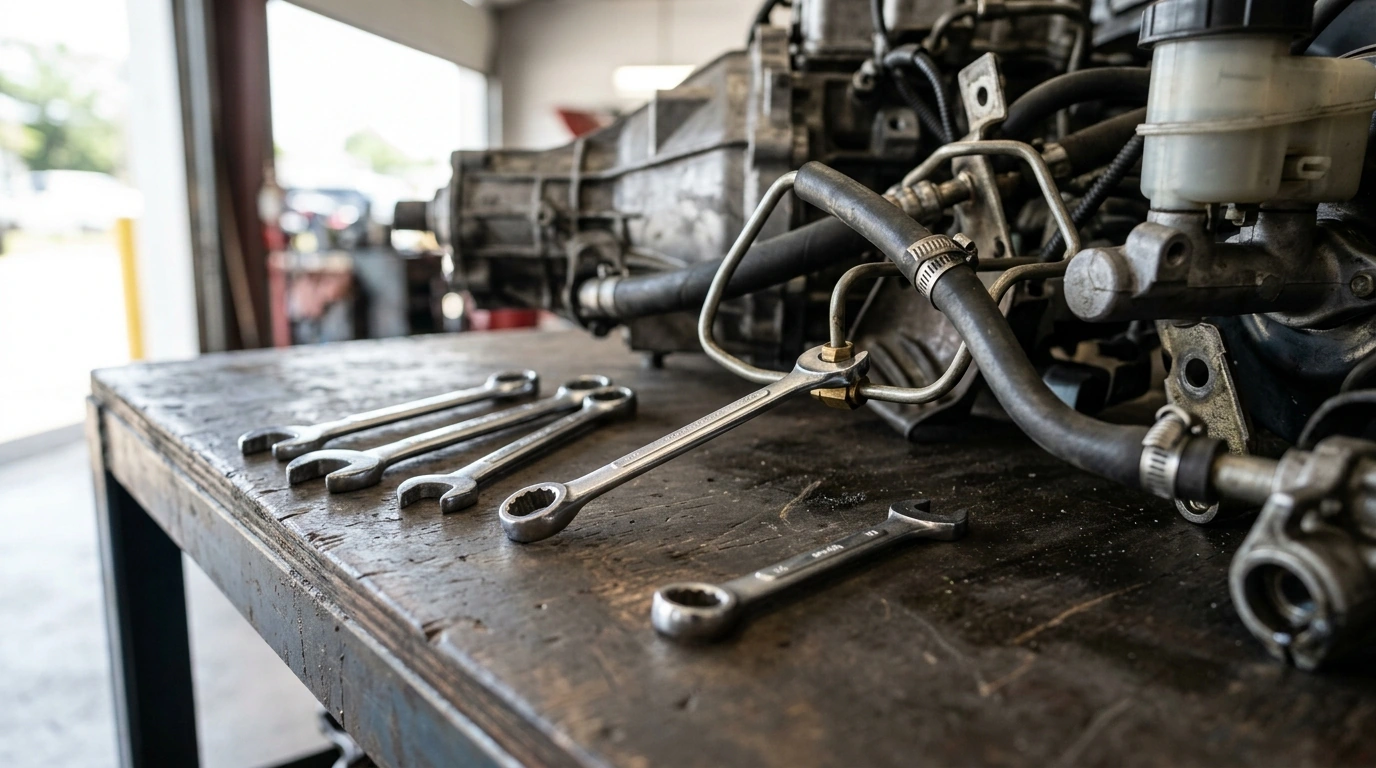
Flare nut wrenches are built for turning soft, thin-walled line fittings—like brake, fuel, transmission cooler, and A/C connections—without chewing up the hex. Instead of grabbing only two flats like a typical open-end wrench, a flare nut (line) wrench wraps around more of the nut, helping you apply torque without rounding corners. This 4-piece SAE/metric set pairs that wraparound head design with a 15° offset, giving you better access in cramped engine bays and undercarriage layouts where a straight wrench won’t swing.
Line fittings are notorious for rounding because the nuts are often softer than standard fasteners and spend their lives exposed to moisture, road salt, and heat cycles. A flare nut wrench is designed specifically for that environment.
For general safety guidance when working with hand tools—especially around pinch points and chemical exposure—review OSHA’s hand and power tool recommendations at OSHA.gov.
This 4-piece flare nut wrench set is designed as a practical mix of SAE and metric coverage for common automotive and light equipment fittings. The standout detail is the 15° offset, which improves clearance over nearby components and gives your hand more room during short wrench swings. Built from Cr-V (chrome vanadium) steel, the wrenches are intended to handle repeated torque cycles without quickly deforming the heads.
| Feature | What it means in use |
|---|---|
| Piece count | 4 wrenches for covering multiple line-fitting sizes |
| Measurement system | SAE and metric coverage in one set |
| Offset angle | 15° for better access around obstacles |
| Material | Cr-V steel for strength and wear resistance |
| Tool type | Flare nut (line) wrenches for tubing fittings |
Offset isn’t just about comfort—it can determine whether you can keep the wrench fully seated on the nut. In tight areas, a straight wrench may force your hand into a poor angle that “cams” the wrench open and starts rounding the fitting. The 15° offset helps you approach from a slightly different plane and often creates a cleaner swing path.
Even the right tool can round a fitting if it isn’t seated fully or if the nut is packed with rust. A few habits reduce broken lines and stripped fittings.
Yes. A flare nut wrench wraps around more sides of the brake line nut, which helps prevent rounding—especially on older, rusted fittings where an open-end wrench can slip and damage the corners.
A 15° offset improves clearance over nearby parts and gives better knuckle room, making it easier to keep the wrench seated. You can also flip the wrench to change approach angle when space is tight.
Often, yes—especially for common DIY automotive jobs—but it’s still important to confirm the exact nut size. Many vehicles mix standards, and using a near-match increases the risk of rounding soft line fittings.












Leave a comment