
Career growth tends to stall for capable people for a simple reason: effort gets spread across too many priorities. You can work long hours, learn new tools, and still feel “stuck” if your next step isn’t clearly defined, your progress isn’t measurable, and the right stakeholders don’t see your impact. A tighter system—role clarity, a 90-day sprint, high-transfer skills, consistent visibility, and responsible use of AI—reduces guesswork and makes advancement feel less like a lottery.
Momentum starts with specificity. Instead of aiming for “a promotion,” define the next role in concrete terms: responsibilities, scope, success metrics, key stakeholders, and the kinds of projects that typically get assigned at that level. If your company has a leveling rubric, use it; if not, study peers who were recently promoted and capture patterns.
Next, identify the “promotion gap”—the few behaviors that separate strong performers from ready-for-next-level performers. Common gaps include: making decisions with incomplete information, influencing across teams, owning outcomes end-to-end, and communicating crisply to executives.
To avoid diluted progress, choose one growth direction for the next 90 days. Examples include leadership (running meetings and aligning stakeholders), technical depth (owning architecture or analytics), or client-facing impact (shaping requirements and reducing churn). Then translate it into a one-sentence positioning statement that guides which projects you accept and how you introduce your work: “Specialist in X who drives Y outcome.”
A 90-day sprint makes progress visible and verifiable. Set one primary outcome goal tied to the next role and add two enabling goals that make the outcome easier (skills and relationships). Then choose one visible project with measurable impact, clear ownership, and at least one stakeholder who will notice results.
Create a weekly cadence that fits real schedules: one deep-work block for skill building, one block for stakeholder updates, and one short reflection to adjust. Define “done” for each goal—metrics, artifacts, or decisions—so progress can be confirmed, not just felt. Finally, schedule a mid-sprint review at day 45 to renegotiate scope or get resources before the quarter slips away.
| Sprint Element | What to Decide | Example |
|---|---|---|
| Outcome goal | Business result tied to the next role | Reduce onboarding time by 20% by standardizing documentation |
| Enabling skill | One skill that unlocks the outcome | Stakeholder communication and project scoping |
| Visibility action | How decision-makers will see impact | Biweekly update to manager + demo at team meeting |
| Weekly habit | Minimum consistent action | 2 hours skill practice + 30 min reflection |
| Proof of impact | Metric or artifact | Before/after baseline + playbook + feedback quotes |
Some skills pay off across almost any role, industry, or team. Prioritize “high-transfer” capabilities like writing, problem framing, facilitation, negotiation, analytics, and systems thinking. These improve the quality of your decisions and the speed at which others can trust your work.
To make learning translate into advancement, pair every input with an output. A course should produce a template. A book should yield a checklist. A tutorial should end with an internal mini-workshop or a short memo that improves a process. Artifacts are portable proof.
Build stakeholder touchpoints: short updates, clear asks, and explicit next steps. Trust grows when people know what’s happening and what you need from them. Also, turn work into reusable assets—SOPs, dashboards, templates, onboarding guides—because scalable assets extend your influence beyond a single deliverable. For visibility best practices, Harvard Business Review’s guidance on being seen at work is a useful reference: Harvard Business Review.
Protect confidentiality. Don’t paste proprietary data, client information, or sensitive internal strategy into any tool. A strong baseline for thinking about AI risk is the NIST AI Risk Management Framework (AI RMF 1.0).
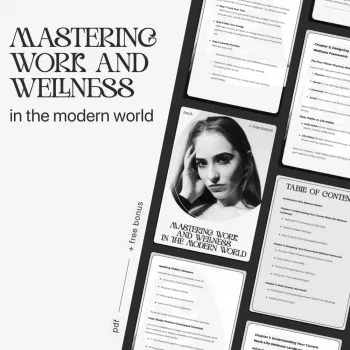
If a ready-to-use structure would save time, Smart Strategies to Accelerate Your Growth (digital download) provides a practical system for busy professionals who want clarity, measurable milestones, and AI-supported planning—without losing the thread of real accomplishments.
To support focused work sessions and cleaner daily execution, small workflow upgrades can help. A reliable, portable pointing device like the Wireless Rechargeable Bluetooth 5.1 Mouse for Apple Devices can reduce friction when switching between deep work, documentation, and stakeholder updates. And if your schedule keeps you moving between home and office, the 4L Mini Portable Fridge with Cooling & Warming Function can make it easier to keep a simple “no-excuses” setup for long sprint weeks.
For role planning and realistic expectations across industries, the U.S. Bureau of Labor Statistics Occupational Outlook Handbook is a helpful resource for job outlook, typical responsibilities, and skill trends.
Many professionals feel momentum within 2–4 weeks once they pick one clear growth target and one visible project. Measurable outcomes typically show up in 8–12 weeks when you track a baseline metric, ship an artifact, and collect stakeholder feedback that confirms impact.
Prioritize high-transfer skills like clear communication, problem framing, stakeholder management, and consistent execution, then add one role-specific skill that supports your next-level responsibilities. Pair learning with artifacts (templates, dashboards, write-ups) and request targeted feedback to accelerate improvement.
Yes—AI works best as a planning and drafting assistant that helps you structure goals, practice, and communications faster. Keep outcomes authentic by verifying outputs, documenting real results, and avoiding confidential or proprietary information in any tool.












Leave a comment