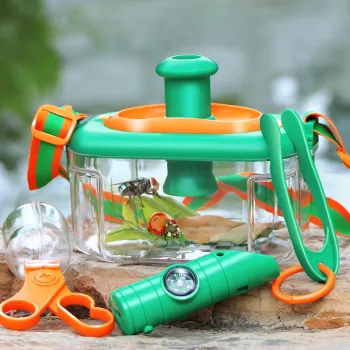
An outdoor insect catching set turns a walk in the yard, park, or campsite into a guided discovery activity. With the right tools and simple safety habits, kids can observe insects up close, learn respectful handling, and release them unharmed—making outdoor time more engaging and educational.
Insect catching sets are built for curious, close-up learning without the “grab-and-squeeze” problem that can happen when kids use bare hands. Used thoughtfully, they help children practice careful observation and develop empathy for small living things.
For extra learning inspiration, the Smithsonian’s education resources offer age-friendly ways to turn observations into mini science lessons.
Not every kit is identical, but most insect catching sets revolve around the same core idea: capture briefly, view clearly, and release safely. Each tool supports one of those steps.
If a child wants to identify what they’re seeing (and learn which insects help gardens), the University of California IPM guide to beneficial insects is a helpful reference.
The best bug encounters are quick, calm, and shaded. A good routine keeps insects safer and makes the experience smoother for kids—especially beginners who may feel jumpy at first.
When exploring in parks or on trips, it helps to follow wildlife-friendly habits like those summarized by the National Park Service’s Leave No Trace principles.
A catching set works well for families who want outdoor time to feel purposeful without turning it into a strict “lesson.” It’s also a simple way to give kids independence: they can run the routine, make notes, and share what they found.
When choosing a kit, focus on safety, visibility, and easy clean-up. The goal is a calm experience: tools that fit small hands, a container that breathes, and simple parts that don’t frustrate younger kids.
| Feature | Why it matters | What to look for |
|---|---|---|
| Ventilated container | Helps prevent overheating and stress | Air holes, secure lid, roomy enough for short viewing |
| Clear viewing window | Makes observation easier and more engaging | Transparent sides and lid with minimal fogging |
| Kid-friendly tools | Reduces accidental harm to insects and fingers | Rounded edges, manageable size, comfortable grip |
| Magnifier quality | Improves detail for identification | Stable lens, not overly distorted at the edges |
| Easy cleaning | Better hygiene after outdoor use | Smooth surfaces, rinse-and-dry construction |
Some children love catching; others prefer spotting and documenting. Mixing both styles keeps the experience fun and reduces pressure to “find something” every time.
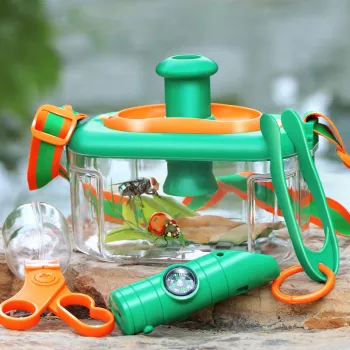
If you want a ready-to-go kit for backyard exploration, the Outdoor Insect Catching Set is designed for simple insect observation during nature walks, park trips, and beginner science activities. Pair it with a small notebook so kids can label sketches, count legs and antennae, or compare where each insect was found.
Keep it brief—generally just a few minutes. Provide shade and airflow the entire time, and release it back where it was found, especially in warm weather.
Yes with supervision and clear rules: avoid stinging insects, don’t touch the face during the activity, and wash hands afterward. Using containers and tools instead of bare hands helps reduce accidental harm to both kids and insects.
Avoid bees and wasps, and skip handling spiders if a child is fearful or inexperienced. Also avoid brightly colored insects that may signal irritation and any protected species—observe these from a comfortable distance instead.









Leave a comment