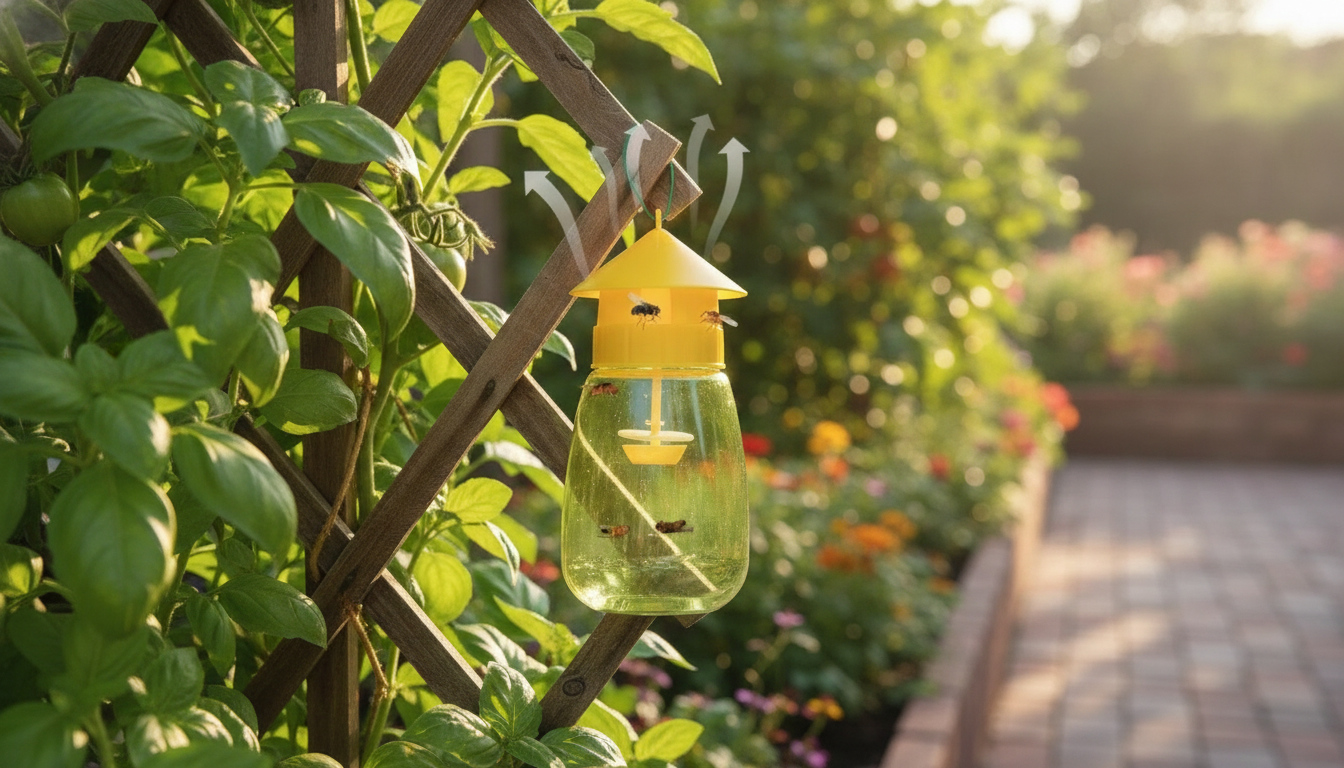
Fruit flies and similar tiny flying pests can show up fast—especially around ripening produce, recycling, compost, or any damp organic residue. Once they find a steady food source, they multiply quickly and seem to “appear out of nowhere” in kitchens, patios, greenhouses, and even near indoor plants. A trap-and-attractant kit helps by pulling pests toward a contained catcher, reducing the swarm factor without complicated setup or constant attention.
If you’re dealing with that familiar buzz near the fruit bowl or noticing small gnats near potting mix, a dedicated lure-and-catcher approach can help you regain control—especially when paired with basic cleanup and moisture management.
A fruit fly trap kit pairs a reusable plastic catcher with an attractant approach designed to compete with the smells pests are already seeking.
For a focused solution, consider the Fruit Fly Trap & Attractant Kit – Plastic Garden Pest Control Catcher. The goal is straightforward: lure pests away from your living spaces and into a contained trap so their numbers drop over time.
Fruit flies and nuisance gnats typically cluster where food residue, fermentation, or moisture is present. Placement matters because the lure must “win” against competing smells.
| Location | Best placement | Common mistake | Simple fix |
|---|---|---|---|
| Fruit bowl area | 1–2 feet away from fruit, near the edge of the counter | Placing directly beside fresh fruit makes the fruit compete with the lure | Move trap slightly away and remove overripe items |
| Trash/recycling | Near the bin lid or behind the bin | Leaving sticky residue inside the bin feeds breeding | Rinse bins and dry before re-luring |
| Sink/drain zone | Next to the sink but not on wet splash areas | Ignoring drains where larvae can develop | Brush drain walls and flush with hot water per local guidance |
| Indoor plants | On a saucer or shelf near the pot base | Overwatering keeps breeding sites active | Let topsoil dry between waterings when appropriate |
Traps are most effective when they’re easy to maintain and placed where pests already gather.
If you’re seeing flies in more than one area—kitchen plus patio, or pantry plus indoor plants—using a trap in each hotspot generally works better than moving a single trap around and letting populations rebuild elsewhere.
A trap lowers the number of adult pests you see, but lasting control depends on removing what they’re breeding in. Even a thin layer of sticky residue can keep the cycle going.
One overlooked step is making food less available in the first place. For households that keep produce on the counter, chilling certain fruits (when appropriate) can reduce how quickly they ripen and ferment. If that fits your routine, the 4L Mini Portable Fridge with Cooling & Warming Function can be a convenient way to store snacks or produce separately—especially in warm months when flies are most active.
For additional prevention guidance, see the University of California IPM overview on fruit flies (UC IPM: Fruit Flies) and food-safety-oriented tips on reducing attraction sources (CDC: Fruit Flies (Drosophila) and Food Safety).
Many households see first captures within 24–48 hours, especially when the trap is placed where flies are most active. Bigger improvements usually follow once breeding sources (overripe fruit, residue in bins, drain buildup) are removed. Warmer temperatures can increase fly activity and may require more frequent attractant refreshes.
It may catch some small flying gnats depending on the attractant and placement near the pots. For longer-lasting control, reduce excess moisture, avoid standing water, and improve potting-mix conditions so larvae have fewer places to develop.
Place it near the highest activity area, but slightly away from competing food sources so the lure stands out. If you have multiple hotspots, use multiple traps rather than relying on one. Avoid very drafty windows or vents that can disperse the attractant scent.











Leave a comment