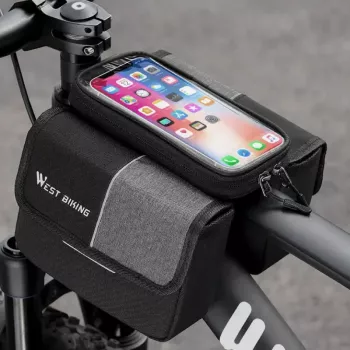
A top tube bag keeps ride essentials within easy reach without stuffing pockets or stopping to dig through a backpack. This style combines a clear touch screen phone compartment, expanded storage for daily ride items, and a detachable setup that makes it easier to remove the bag for charging, security, or quick transitions between bikes.
On everyday rides, the biggest hassle usually isn’t carrying gear—it’s accessing it quickly and safely. A well-designed top tube bag turns “where did I put that?” moments into a quick zip or tap.
The clear touch window is designed to support on-the-go map checks, music control, and call screening without opening the main compartment. It’s especially handy when route guidance is more about quick confirmation than constant interaction.
Capacity is where this style of bag earns its keep: it can hold the “small but necessary” items that add up fast—mini pump or CO₂, tire levers, multitool, wallet, and energy gels—without bulging jersey pockets.
Detachable designs make it easier to remove the bag for charging your phone, taking valuables into a café, or swapping it between compatible bikes. It’s also useful when you want to keep the mounting base in place and only remove the storage portion.
A secure top tube bag should stay planted during climbs, sprints, and rough pavement. When sway is reduced, it’s easier to avoid knee rub and keep steering feeling predictable—especially when you’re standing and rocking the bike.
Most top tube bags in this category focus on shielding contents from splashes and light rain. For heavy rain days, adding small inner pouches for electronics and paper items provides extra peace of mind, and drying the bag after the ride helps preserve materials over time.
This style of top tube bag fits riders who prioritize fast access. It works best as a “frequent-access” bag—items you might need mid-ride—while heavier or rarely used items can live in a saddle bag or frame bag.
| Ride type | What to carry in the bag | Why it helps |
|---|---|---|
| Commute | Phone, keys, badge, small power bank, snack | Fast access at lights and stops; keeps pockets free |
| Road training | Phone, gels, lip balm, mini tool | Easy fueling access without jersey pocket overload |
| Gravel rides | Phone, tire plugs, multitool, small first aid | Quick repairs without unloading other bags |
| Day touring | Phone, wallet, sunscreen, snacks | Detachable convenience at cafés and viewpoints |
A top tube bag should feel like part of the bike, not an accessory that shifts around. A few minutes of setup prevents most common issues.
For general safety reminders when riding near traffic, review guidance from the National Highway Traffic Safety Administration (NHTSA).
If you’re planning a tune-up alongside your new storage setup, Park Tool’s repair help library is a solid reference for common adjustments and maintenance routines.
Touch response depends on glove type and screen sensitivity; touchscreen-compatible gloves work best. If response is inconsistent, stop briefly to interact or adjust the phone position under the window.
A properly positioned bag should not touch knees or limit standing pedaling. Handling impact is usually minimal, but overpacking can add sway; tighten straps evenly and keep heavier items elsewhere.
Most designs aim to resist splashes and light rain; for heavy rain, add a small waterproof inner pouch for electronics and paper items and dry the bag after the ride.









Leave a comment